
Why “New Quality Productive Forces”? Observation on the practice of the Chinese path to modernization
By Adham Sayed
Editor's note: Adham Sayed is a senior research fellow at the Institute of East Asian Studies, Zhejiang Gongshang University. The article reflects the author's opinions and not necessarily the views of China Up Close.
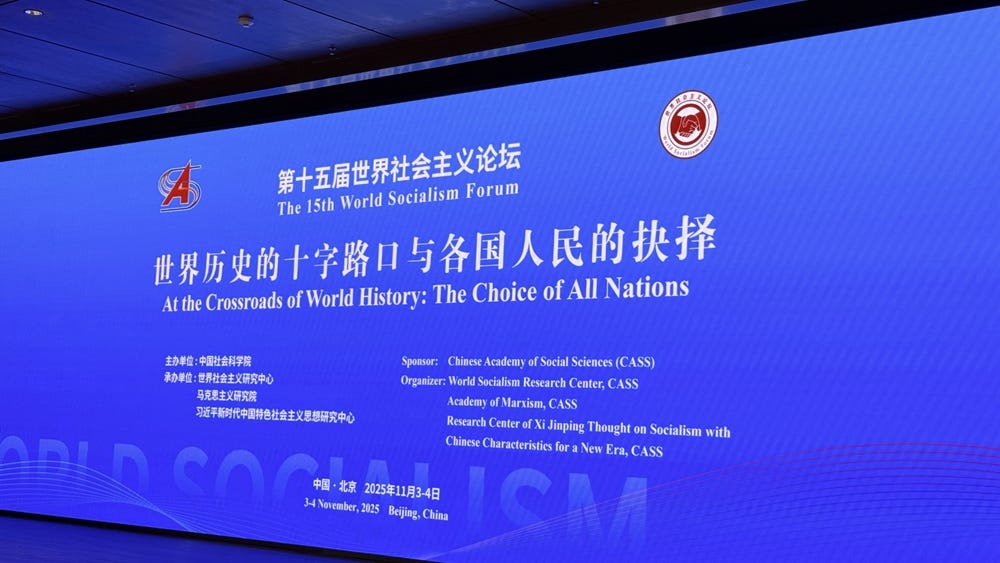
I will focus on the importance and role that the development of productive forces plays in the process of achieving the building of a socialist state in China.
We are witnessing a defining moment in human history, debatably as transformative as the shift from feudalism to capitalism 500 years ago. Some suggest parallels with the crises of the last century, such as World War I, which ended the Age of Empires.
Yet, today’s global transformations appear more profound, driven by countries like China, which seeks to reshape global economic and social paradigms through socialism. This claim may seem overstated, but it is necessary to make sense of what China is currently undertaking.
In its 20th Congress, the Communist Party of China (CPC) outlined its second centennial goal: building a modern socialist state by 2049.
This raises a critical question: Is this just a slogan, or is China really and seriously working toward this goal? What if it succeeds? Specifically, what if production relations in the world’s second-largest economy become socialist?
Historically, the CPC has demonstrated an ability to convert slogans into actionable programs. These programs translate into daily struggles for hundreds of millions of Chinese citizens, and most of these goals have been achieved. The latest example is the elimination of extreme poverty. Thus, I can confidently state that slogans in China are made to be implemented.
So, how will China build a modern socialist state by 2049?
For five decades, the Communist Party of China has led the nation toward one central goal: socialism. At every stage, there has been boldness—boldness in presenting new ideas, adapting Marxist theory to align with Chinese realities and characteristics, confronting imperialism, liberating China politically and economically, and carving out an independent development path free from colonial dictates.
Later, in 1978, China entered a new phase marked by “reform and opening up.” This phase saw the liberation and development of China’s productive forces, with the aim of “building socialism in China,” as repeatedly emphasized by Deng Xiaoping: “According to our experience, in order to build socialism, we must first of all develop the productive forces, which is our main task. This is the only way to demonstrate the superiority of socialism. Whether the socialist economic policies we are pursuing are correct or not depends, in the final analysis, on whether the productive forces develop and people’s incomes increase. This is the most important criterion. We cannot build socialism with just empty talk. The people will not believe it”.
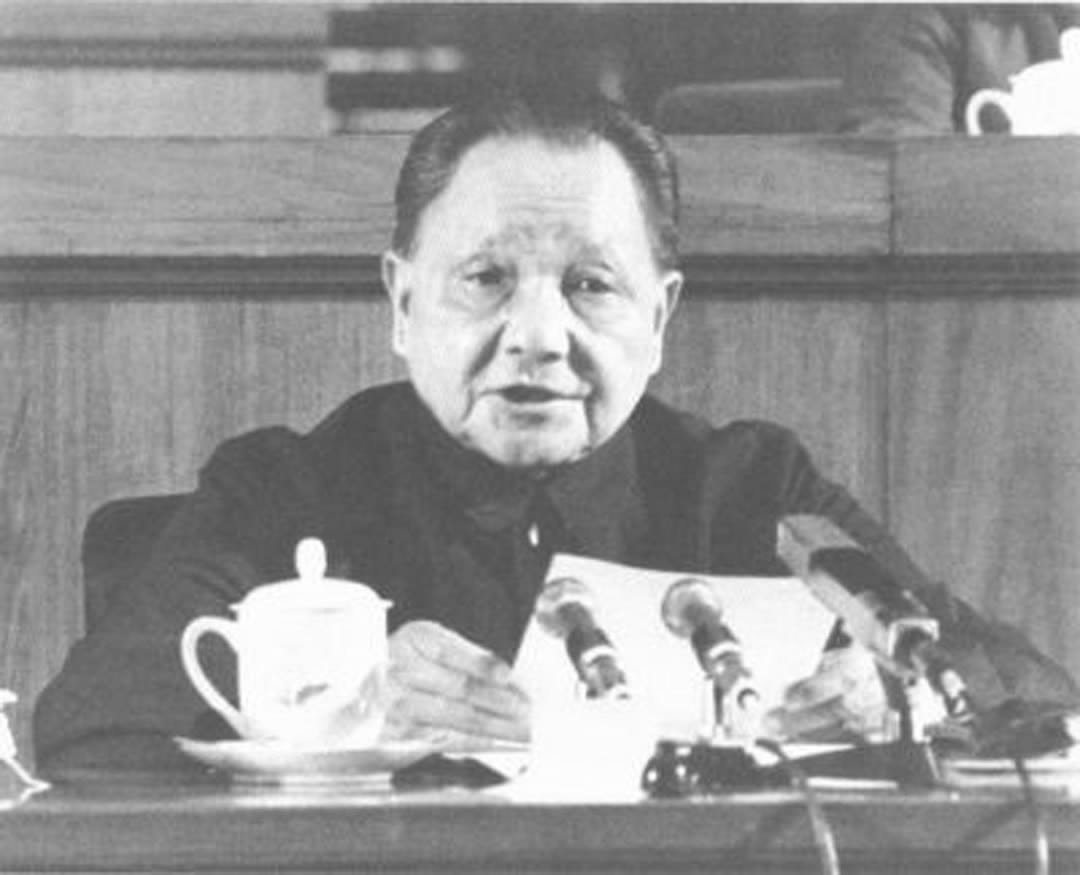
Then, the “reform and opening-up” policy launched by the CPC aimed to develop productive forces, not to abandon socialism, but to strengthen it. These policies achieved the rapid development of China’s productive forces.
Since the CPC’s 18th Congress, socialism with Chinese characteristics has entered a new era, emphasizing technology and innovation as pillars of development. This approach is encapsulated in the concept of “New Quality Productive Forces,” introduced by President Xi Jinping.
According to Marxist political economy, science and technology play a crucial role in advancing productive forces. Marx famously noted the transformative impact of productive forces on societal production modes, stating: “The hand-mill gives you society with the feudal lord; the steam-mill society with the industrial capitalist.”
Thus, the long journey toward building a modern socialist state necessitates a new wave of liberating and advancing the productive forces. Therefore, the concept of “New Quality Productive Forces” is a key term for understanding China’s modernization model and will serve as a driving force for socialist modernization.
Over the past decade, China’s efforts in this regard have been remarkable. Two years ago, I visited Qingdao and its automated port, where I was surprised to witness the unloading of one of the world’s largest cargo ships. The operation involved no workers on the dock—only dozens of highly efficient and complex robots.
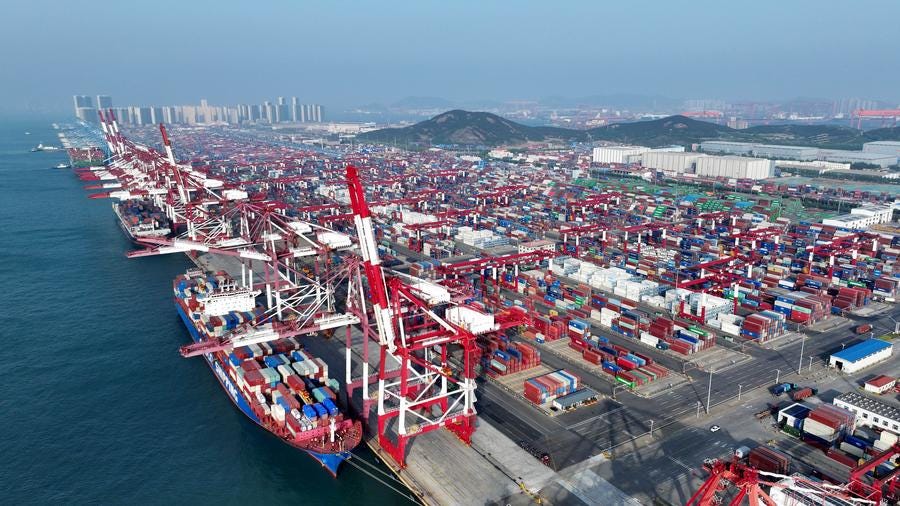
For instance, a friend once asked me, “What will happen to the workers replaced by robots at Qingdao Port?” This is indeed a legitimate question, given that we are observing a novel experiment unprecedented in human history.
Until now, our understanding has been shaped by the Western capitalist model. In Qingdao’s case, the replacement of workers by robots would, in a capitalist system, aim to maximize surplus value, generating immense profits for a small group of capitalists while leaving the workers unemployed and impoverished. However, this transformation must also be viewed through the lens of the Chinese socialist model.
Before I continue, let me note that, of course, I’m not speaking about today’s cases, but just as an expectation for the future when China consolidates its socialist transformation. Today, China is still on this path and, according to the CPC, has already entered the primary stage of socialism—a phase expected to last over a century. The goal by 2049 is not to begin socialism, but to deepen and modernize it. Until then, there will still be many issues to address, including class disparities. Therefore, now I have no idea what happened to those workers in Qingdao.
So, this transformation must be reexamined through the lens of the Chinese socialist model. Unlike the Western capitalist model, China’s means of production are under state control, led by the CPC, which prioritizes public welfare. Consequently, surplus value is redistributed across society rather than concentrated in the hands of a select few capitalists. This is how China eradicated extreme poverty—a feat impossible in capitalist systems like the United States.
Through centralized control over surplus value and its redistribution to enhance societal welfare, China can ensure universal access to basic needs such as education, healthcare, housing, and transportation. Meanwhile, workers displaced by automation, like those in Qingdao Port, can engage in other meaningful pursuits without worrying about basic necessities.
In the Chinese context, if productive forces continue to develop and the path toward socialism progresses, workers will benefit in two key ways: first, by having more free time; and second, by moving away from hard labor toward jobs aligned with their talents and aspirations. This vision is not utopian but rather grounded in theoretical principles increasingly achievable through China’s ongoing experience.
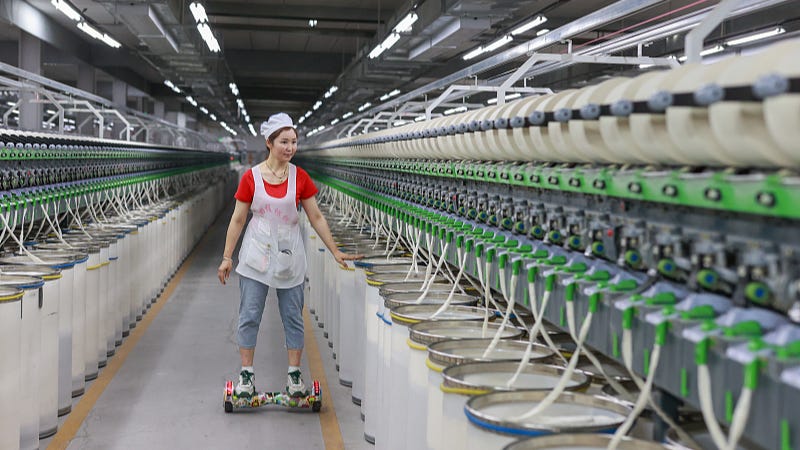
As long as the CPC maintains control over the means of production and fulfills its role as the vanguard of the working class, implementing strategic plans guiding the country step by step toward socialism, these goals will be realized sooner than expected. Looking back 70 years, we see the extreme hardships endured by the Chinese people, working tirelessly for a single daily meal. Comparing that to today’s reality shows that nothing is impossible and that China is on the right path.
Following and learning from this experience will be immensely enriching—not only for researchers like us but also for all people worldwide seeking a way out of the crisis imposed by imperialist capitalism.
About the Author
Adham Sayed is a senior research fellow at the Institute of East Asian Studies, Zhejiang Gongshang University.

Page Editor: Jin Yulin
Call for Contributors!
I’ve added an “ Op-Ed” section to China Up Close. It’s an open platform I specifically designed to let everyone share their own perspectives with the world. Articles can be related to any topic as long as you’re highly passionate about it! Article length is recommended to be within 700 - 900 words.
If you have an idea for an Op-Ed, contact jjnewsletter@hotmail.com with a brief description of the article's focus.
Jingjing’s Social Media Links
X: @Jingjing_Li YouTube: @Jingjing_Li Facebook: Talk it Out with Li Jingjing
TikTok: @iamlijingjing Reddit: r/NewsWithJingjing Instagram: @jj_ontheroad
What happened to the dockers in Qingdao Port?
In a socialist socioeconomic system, collaborative productive enterprises will mutate their functions to match productive development needs, so workers will change their jobs to other enterprises nearby, whether newly created or already existing. Unloading containers from ships is only one function of a port. There will be other docks at that port or nearby ones which have not been mechanised, needing dockers. What is done with those containers involves many other functions - transporting and distributing the containers, unloading them at their destination points, monitoring their logistic progress, recommissioning their overseas origins, and so on.
Maintaining opportunities for workers to change jobs, be retrained, and supported while temporarily unemployed are all vital to the wellbeing of socialist socioeconomics. It's likely that these matters are already being taken care of, but outside the purview of outside observers and commentators. It would be useful for academics to investigate what's happening and report on it, whether favourably or critically.